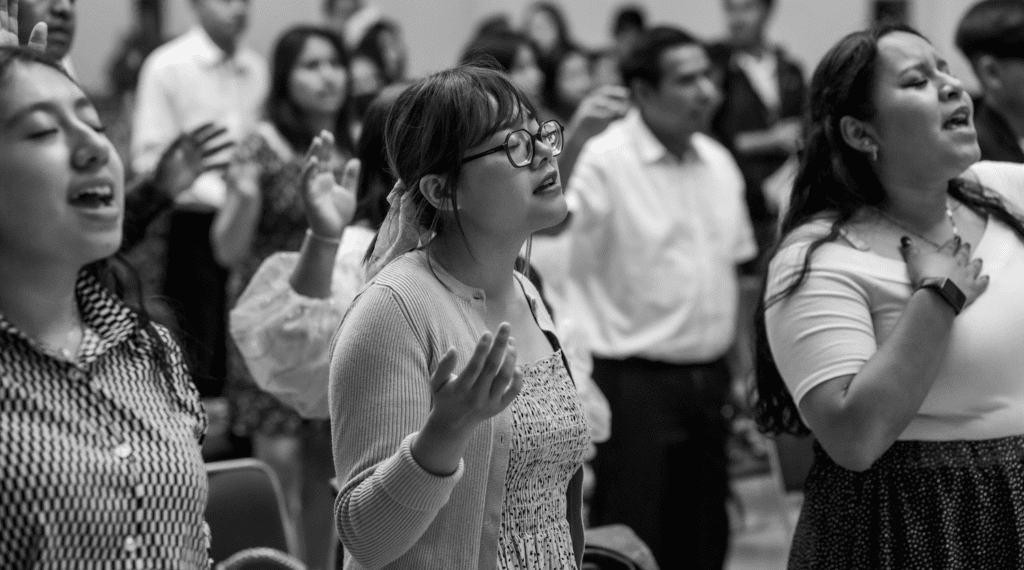
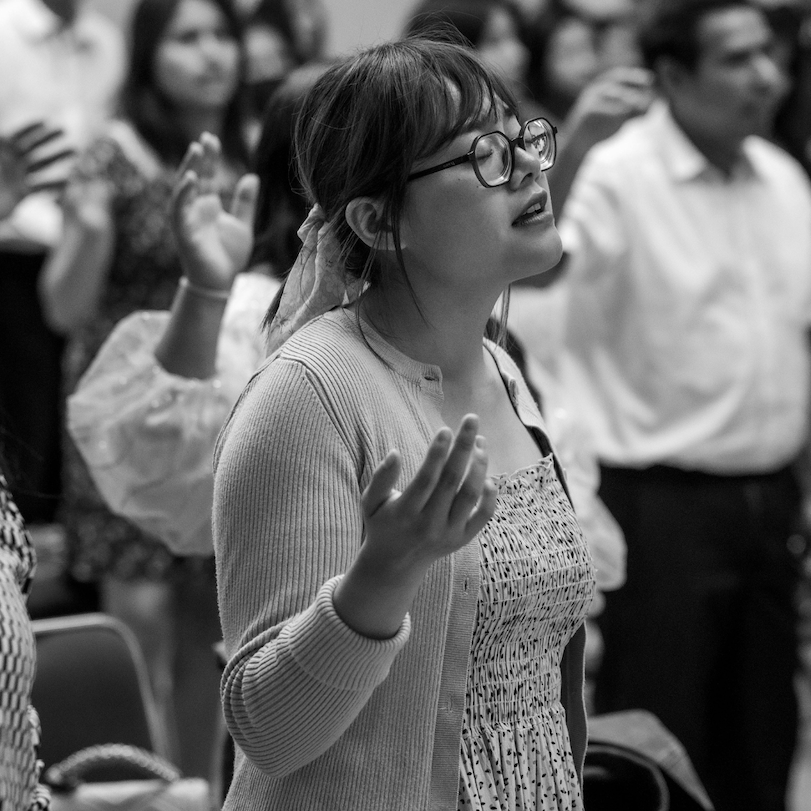
As Lizzie walks through the city streets of Lima, Peru she spots stickers on the ground asking, ‘Is your period late?’
These stickers, placed by abortion clinics, are scattered all over the city. “I see them everywhere, as I walk every 20 meters there’s another one” she says.
Lizzie, from Somerset, England, has been in Peru since 2014, wearing many hats in her role as an SIM mission worker. She serves with AIDIA, a local organisation focused on community development, Bible translation, church support, and church planting.
She’s also a water engineer, travelling high into the mountains to bring clean drinking water to remote villages, distributing water filters, teaching hygiene, and sharing Bible lessons.
Her time in the rural villages, where God has steadily directed her, has shaped the work she does now – discipling young women. While Lizzie still supports AIDIA, much of her work is now focused on her local Baptist church in Abancay, as well as two other large churches in the city.
Together, these three churches support small village churches, both spiritually and practically. Lizzie’s years of experience working in rural communities have made her a vital bridge between these worlds.
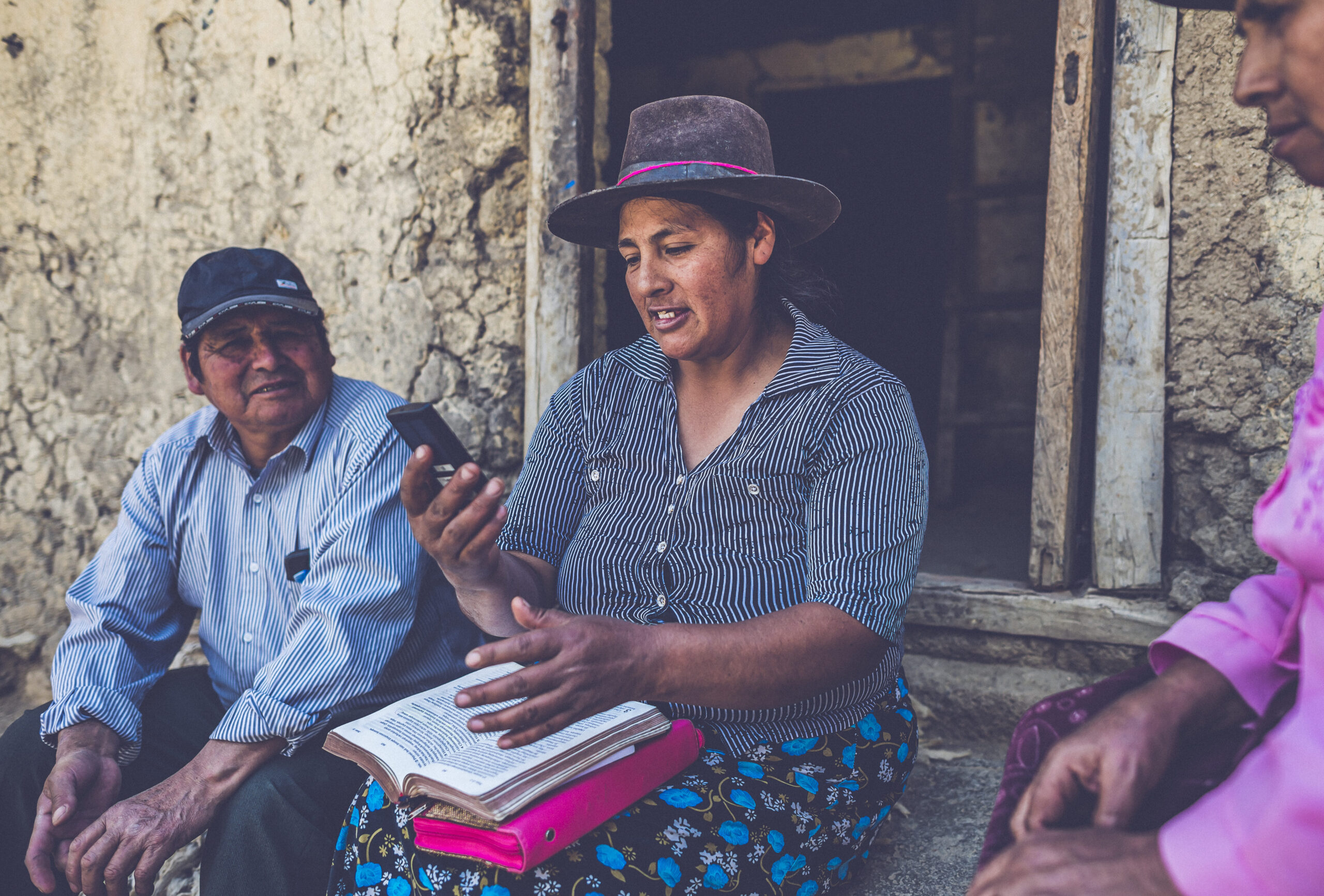
When Lizzie travels to remote villages, she visits rural churches that are often difficult to access. There, she has met many young women with steadfast faith but when they leave their villages to study or find work in the city, they step into an unfamiliar world; one where messages like ‘Is your period late?’ are plastered across the streets.
The city is full of distractions, temptations, and pressures that can pull them away from their faith. This struggle highlights the need for intentional outreach and Christian community.
There are three city churches in Abancay that do youth ministry, mostly reaching out to those who’ve grown up with a family connection to the church. However, it has been more challenging to reach the young people who have come to the city from villages.
“A lot of them are students, and education is understandably a priority. But it also takes up a huge amount of their time, leaving little space for other things.” Lizzie says.
Many of these young people are determined to work hard and succeed, but this can make it harder for them to engage with church and fellowship.
For all the strategies the team might come up with, Lizzie knows the ministry is deeply reliant on prayer. As Lizzie says, “The best thing we can do is pray.”
This Lent, which isn’t widely observed in Peruvian evangelical churches, Lizzie sees an opportunity to create personal space with God and seek His face.
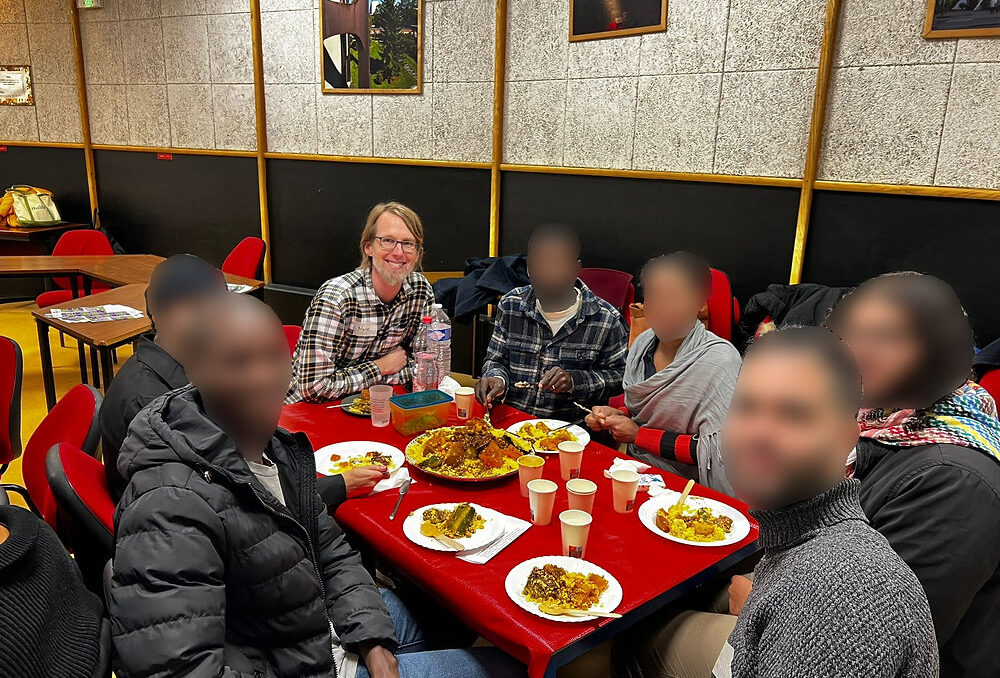
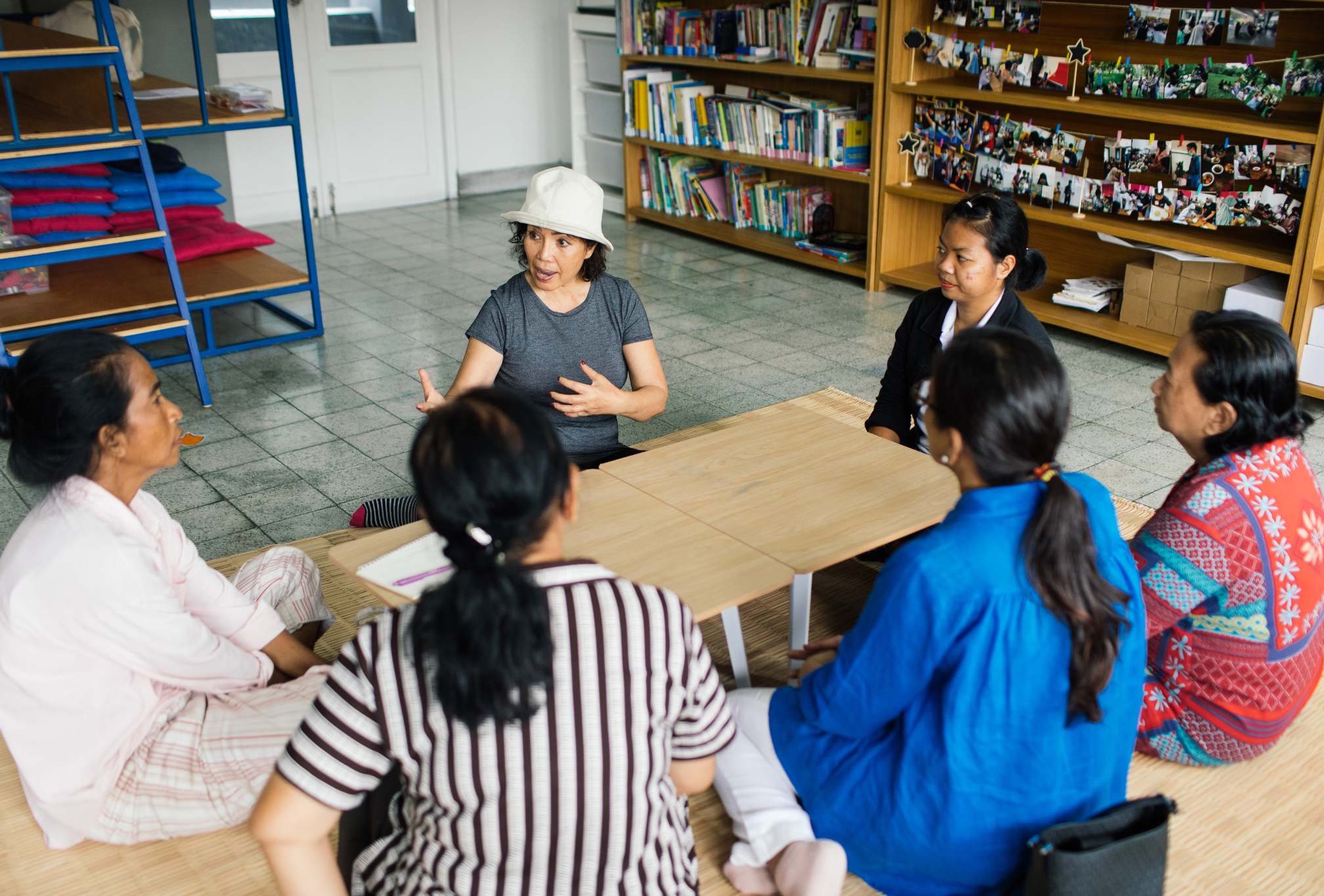
Beyond prayer, Lizzie is actively discipling these women. She hosts Bible studies, shares meals with them, and organises games at her house; all with the goal of walking alongside them in their faith.
These connections create a space where young women can grow in their faith and find support through life’s difficulties.
One of the young women, now in her 30s, came to the city when she was about 11, excited to study and build a new future. But after starting a relationship with a boyfriend, she became pregnant and was overcome with shame.
She didn’t know what to do, whether to stay with him or leave, whether to continue the pregnancy or not. In the end, she chose to have an abortion. The decision left her feeling lost.
A few years later she came back to Lizzie, wrestling with her faith and struggling to believe she had any worth.
Image credit: Israel Torres from Pexels
Through the encouragement of Lizzie and the support of her church family, she has found genuine forgiveness in Jesus. Lizzie can see how Jesus is at work, healing her from the pain of past decisions and restoring the brokenness caused by fractured family relationships.
In a world where young women are bombarded with messages telling them who they should be, what they should look like, and what choices they should make, Lizzie’s work is a reminder that Jesus offers something far better.
Unlike the world’s empty promises, the gospel provides true identity, forgiveness, and purpose. Through Lizzie’s discipleship, these young women are learning that their worth isn’t defined by external pressures or past mistakes but by the love and grace of a Saviour who calls them His own.
Pray
- For local leaders – Pray that more people will step forward to invest in young people, recognising their value and potential. Ask God to raise up leaders who are willing to connecting with the youth, even amidst generational differences
- For teenagers in the city – Pray for young people who have moved to the city, that they will find strong support systems, stay firm in their faith, and not feel lost or alone in a new environment.
You might also like

In 2026, we renew our call to stay connected: to Christ, to one another, and to the communities where the gospel is least known. Join us in prayer as we pu...
When León and Mari arrived in the spiritually resistant town, they faced hostility and isolation. But through patient presence, genuine relationships, and...
In Radcliffe, UK, children without father figures find hope through Sports Friends coaches. They are finding mentorship, love and learning about the faithf...
For many around the world, Christmas Day passes quietly unnoticed and uncelebrated. Faithful Witness asked what December 25th looks like in communities whe...
Raised Muslim in South Asia, Joel* longed to know who God truly was. Through SIM programmes, Christ brought light, joy and deep faith into his life.
How do you hold on to God’s word when you can’t hold it in your hands?
When Kamal and Sunita first came to Shalom Clinic, a Hope for Life ministry in South Asia, they were emotionally and spiritually exhausted. Poverty, addic...
After forty years of faithful mission service in Africa, a mission worker couple, based in the rural village of Nanjoka, Malawi, have now been called back ...
How do you hold on to God’s word when you can’t hold it in your hands?
Read and share stories from SIM mission workers who are seeing Christ’s light shine in places that once seemed dark.
SIM has been involved in church planting among the Wolof—one of the world’s least-reached people groups—right in the heart of the city since 2021. Re...