
By SIM France-Beligum
Nate Duriga is a mission worker based in Strasbourg, France where he works mainly with international Muslim students, introducing them to the Christian faith. In the weeks leading up to Ramadan, he reflected on the importance of interfaith dialogue, open and respectful conversations between people of different faiths, and what it means for Christians today.
In my ministry, I often engage in conversations with Muslims and organise several discussion groups about the Bible and the Qur’an during the academic year, sometimes in partnership with interfaith organisations. Recently, several Christians have asked me about the purpose of these dialogues, raising questions such as: “How can you share your faith at this kind of event without getting drawn into the idea that all religions are the same?” Or “Isn’t there a lot of pressure at these events to only say things that everyone agrees with?”
These are thoughtful questions I’ve heard in recent weeks about a student dialogue event I co-organised with a Muslim group. They reflect the real challenges of engaging in dialogue as a Christian witness. Naturally, I’ve spent a lot of time reflecting on this, since I often need to explain both to myself and to others why I do this work. This time, the question came through an email in response to an announcement I’d shared with a network of evangelical churches in Strasbourg, so it was the perfect opportunity to write out my response.
To create genuine friendships
One of the main goals of participating in these events is to form genuine friendships between Christians and Muslims. While many interfaith initiatives focus on the idea of “brotherhood” or “unity” among religions, I prefer to speak about friendship. Sharing faith through friendship is familiar territory for Christians.
When I first arrived in Strasbourg to launch an initiative among Muslim students, many of the Christian students in our groups told me, “We don’t have any Muslim friends to invite to these discussions.” That confirmed my conviction: if we want Muslims to hear the gospel, we need to first build friendships. These dialogues create a safe and open space where that can happen naturally.
“How can you share your faith without getting drawn into the idea that all religions are the same?”
To be peacemakers
Honest, face-to-face dialogue also reflects our call to be peacemakers. It helps build understanding rather than tension between Christians and Muslims, echoing Paul’s call in Romans 12:18 to “live at peace with everyone.”
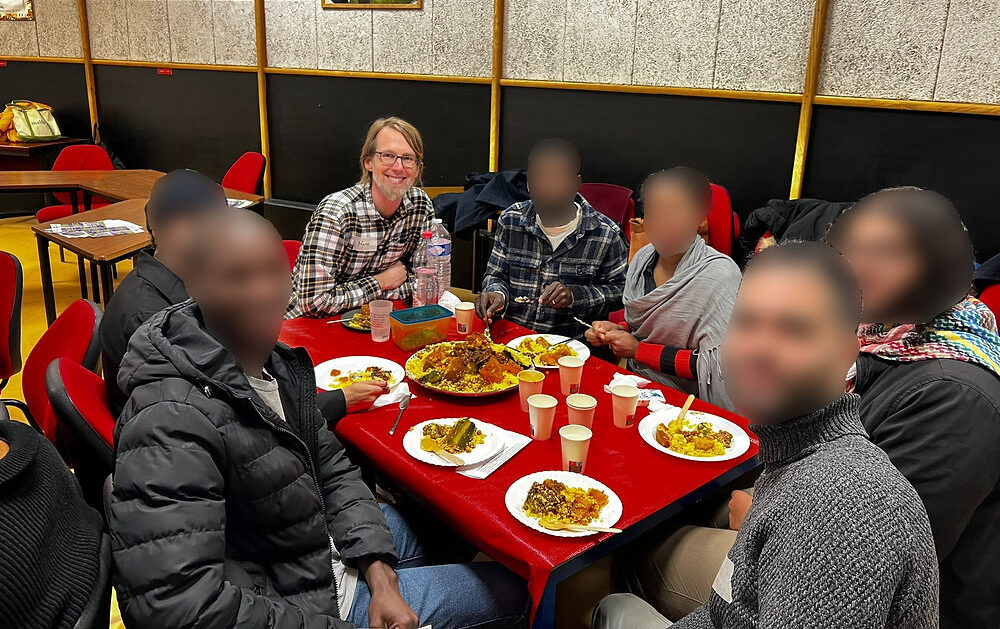
The week before our last event, I met with the imam who would share the discussion time with me. We talked about the biblical and Qur’anic texts, building trust before the public event. On the day itself, around forty Christians and Muslims came together to read, discuss, and share a meal. At my table, seven people from seven different nationalities spoke freely about their beliefs and experiences.
One Muslim student told us afterwards, “Here, people actually listen when we talk about what we believe. Out in the street, people make assumptions based on what they’ve seen in the media. But here, it’s different. I’ll definitely be back next month for the next Bible–Qur’an discussion.”
Too often, young Muslims in France feel excluded and misunderstood, which can lead to bitterness and even violence. But at that moment, this young man felt welcomed and heard by Christians. Imagine how things might change if more people could experience that kind of genuine dialogue.
Please pray
- That Nate and the Christian students would share their faith with wisdom, courage and sensitivity during each evening of dialogue.
- That God would stir a genuine interest in His Word among the Muslim students Nate meets.
You might also like
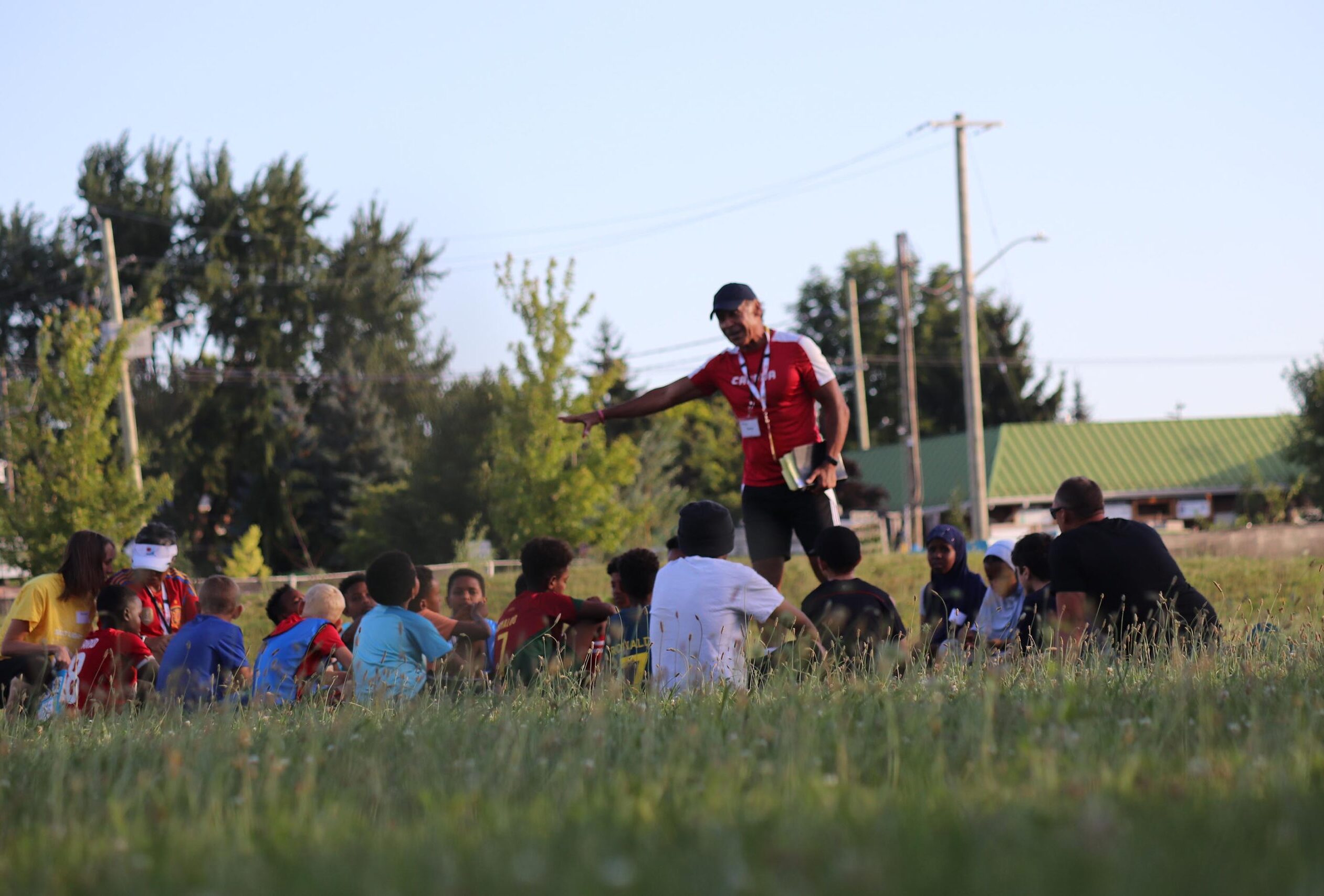
Gary and Jo-Anne thought retirement would mean slowing down but instead, they stepped onto the pitch. Through weekly neighbourhood football sessions and pr...
Maffra Community Church has spent more than 30 years proving that global mission doesn’t always begin with travel. Through faithful partnership with SIM ...
More than 40 nations gathered in Nairobi for the Trauma Healing Institute’s Global Community of Practice, the first held outside North America, celebrati...
When a new mum found herself overwhelmed by depression and doubts about her worth, SIM mission worker and psychologist Gina McConley stepped in with gentle...
Stephanie served in Syria and Lebanon for over 25 years, sharing the gospel, supporting migrant workers, and co-founding a daycare that still cares for 75 ...
After 13 years serving in Benin with SIM, Sarah and Lee have returned to Germany, their sending country. Lee, who served as a finance manager and later tea...
A young Muslim boy in a remote village encounters the love of Jesus through a Christian school. As trust grows, Abdu discovers the truth of the gospel, bra...
After stepping into mission work at 26, Jang Doo‑Sik discovered that calling rarely comes with certainty. Today, as only 2% of Generation Z are reached w...

For mission workers, a prayer letter is a way of inviting others into the story God is writing. SIM mission worker Mark Azzopardi reflects on how to write ...
In the glittering cities of the Arabian peninsula, one worker’s encounters with migrant lifeguards become a vivid reminder of the urgent call for Christi...
In West Timor, where poverty and limited opportunities leave families vulnerable to exploitation, anti-trafficking work is focused on walking alongside com...
In 2026, we renew our call to stay connected: to Christ, to one another, and to the communities where the gospel is least known. Join us in prayer as we pu...