Theological education leads to gospel conversations in Central Asia

CENTRAL ASIA, MENACA | 20 November 2026

University students in Central Asia are learning how the Old Testament points to Jesus. They are gaining confidence to share their faith with friends, family members and even taxi drivers. Thanks to Oliver and Julia’s weekly course, they’re learning to read Scripture with clarity, stand firm against false teaching and speak about Christ with courage.

By a mission worker serving in Central Asia

Some university students in Central Asia once struggled to see the relevance of the Old Testament. Now, they’re discovering how it connects to the story of Jesus and learning how to share their faith with the people around them.

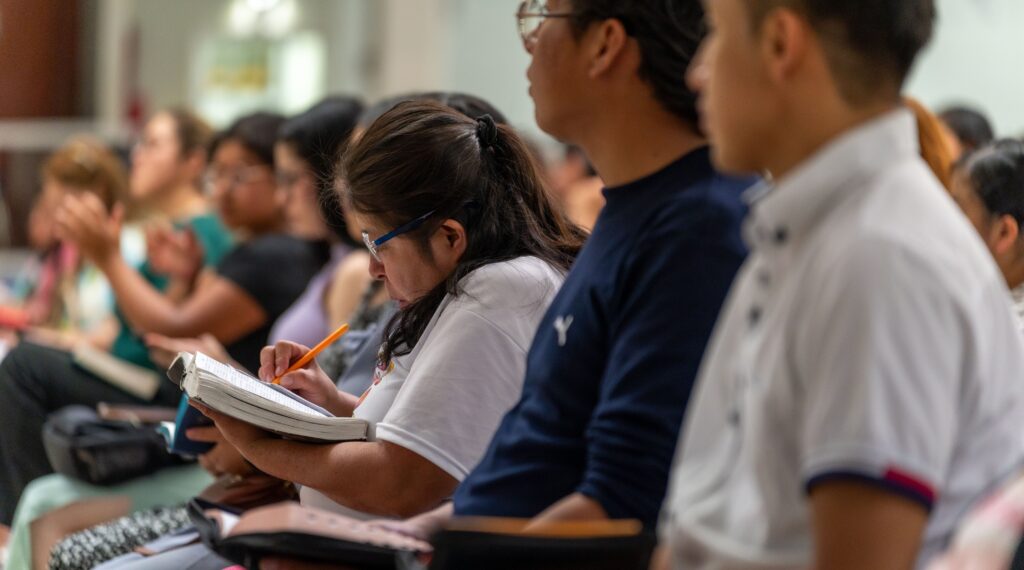
Oliver and Julia are helping them do this through a weekly theological education course that explores what the Old Testament reveals about Jesus and equips students to talk about their faith with friends, family members and even taxi drivers.

The programme offers a range of courses, although not all have been fully translated into local languages. The first course gives students an overview of the Old Testament and what it reveals about Jesus.

“This foundation will help them to stand firm against false teachings because they now know how to read the Word and make connections [between the Old Testament and New Testament].”

Oliver and Julia began by inviting students from their own fellowship to work through the course with them.

Initially, they found it difficult to interest students in joining the class. Students weren’t interested in the Old Testament, and didn’t see how it could be of use. Some still joined, mostly because they saw value in spending more time with the couple.

Over time, these students found they enjoyed learning about the Old Testament and became more interested in studying it.

At first, some students said they thought this part of Scripture was unimportant because its events had already happened. Now, they can see how the story connects all the way to Revelation and how God’s plan runs throughout Scripture.

“This foundation will help them to stand firm against false teachings because they now know how to read the Word and make connections [between the Old Testament and New Testament],” Oliver added.

At the end of each lesson, there are several questions these students can use to start conversations with friends, co-workers, or anyone else they encounter. The questions are simple conversation starters like, “Do you consider the Bible to be reliable, and why or why not?”

Often, during the debrief the following week, many in the group will have shared with taxi drivers because they spend a lot of time commuting to and from university classes or jobs. Others reach out to family members, many of whom are Muslim.

Sometimes the results of conversations are fruitful simply because there isn’t a rejection. Two of the male students spent time sharing with one of their professors about who Jesus is. She opened up and told them how long ago she had visited a church with a friend. She wasn’t against them, didn’t argue or even shut down. That day the positive result was merely listening.

“I tell them we need to remain faithful and do our part, leaving the rest to the Holy Spirit.”

And then there are the negatives, the rejections. One student, Nazik, shared with her father after one of the course lessons. She asked her father some of the questions she learned, and at the end of their conversation, she asked if he would like to read the Bible with her. He agreed. Unfortunately, pressure from friends ultimately caused him to turn away from the truth his daughter desperately wanted him to believe. His friends mocked him, saying he can’t control his family.

Some students in the group have felt they will lose friends when they share too much or too often about their faith. One young man took a friend to his local church’s meeting, only to have the friend’s parents find out and threaten to call the police. Reactions like this can cause fear in the students.

Oliver and Julia use their time outside of these courses to disciple their students, encouraging them and offering advice when conversations don’t feel successful.

“I tell them we need to remain faithful and do our part, leaving the rest to the Holy Spirit,” Julia said. “Perhaps in ten or twenty years, God will begin to work in their hearts. It could happen tomorrow, or they might never come to faith – we don’t know. The main thing is to give them the opportunity to hear about Christ.”

“The main thing is to give them the opportunity to hear about Christ.”


Please pray

  • That students develop a strong, lasting grasp of how the Old Testament points to Jesus, giving them confidence to read Scripture well and stand firm against false teaching.
  • For courage, wisdom and protection as they share their faith with friends, family members, professors and even taxi drivers, especially when conversations lead to fear, rejection or pressure.
  • That every interaction whether welcomed or resisted, to plants seeds the Holy Spirit will nurture in His timing, opening hearts to Christ over months, years or even decades.