
By Arthur*, an SIM mission worker
The Middle East is full of contrasts. Home to ancient towns but also ultra-modern business hubs; political turbulence and grinding conflict but also pockets of stability and investment; humanitarian catastrophe but also vast riches from natural resources. It’s the region in which Christ was born, lived and taught, was crucified and rose again. But it’s also now a region in which huge majorities have never heard his good news, and where following him can come at great personal cost.
It was a series of encounters with lifeguards during an evening walk in the Arabian peninsula that helped Arthur*, one of our workers from East Africa, understand the urgency of bringing Christ’s good news to those living and dying without him in regions like this.
The bright yellow shirts of lifeguards stood out clearly at regular intervals around the miles-long sweep of white sand. I was strolling along the Corniche, a wide paved strip separating beach from skyscrapers, in the relative cool of the evening. A group of bathers bobbed idly in the warm water, veiled mothers scrolled on phones while keeping an eye on young children splashing at the water’s edge, a misdirected football threatened a family picnic, dice rattled as elder men on plastic stools played backgammon, puffing on water pipes. Out beyond a line of fluorescent buoys, a motor boat hummed and young lads raced on jet skis. All under the careful watch of the yellow-shirted lifeguards.
“None were natives of this Arabian peninsula country, but had come from Bangladesh, Ethiopia, Kenya, South India, Sri Lanka and Uganda.”
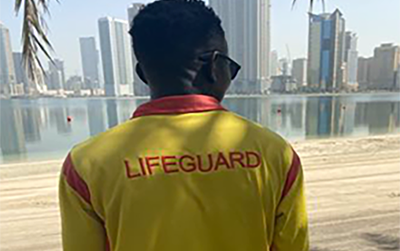
I soon realised that these lifeguards were of many nationalities. So I made a point to pause, exchange greetings and chat briefly with many of them to find out more. None were natives of this Arabian peninsula country, but had come from Bangladesh, Ethiopia, Kenya, South India, Sri Lanka and Uganda. Different ethnicities, languages, cultures and hair styles.
All employed by the government through a contractor – brought to this land with the task of saving lives. The conditions of their contracts vary by nationality but they work together efficiently to ensure that those enjoying the beaches and water sports are kept safe.
They have been trained well to carefully follow the protocols in their life-saving manuals. They are well equipped, with personal flotation devices and communications equipment, lunch-boxes and water bottles, and basic shelters to protect from the fierce sun as they keep watch. They must pay constant attention, for disaster could unfold in seconds. How easy it would be for them to be distracted by the glitz and sparkle that defines this city.
Please pray
- For God to raise up and equip messengers of the gospel in the Arabian Peninsula, giving them courage to bring the life-saving message of Christ to those who have never heard.
- For unity and sensitivity among believers working in the Arabian Peninsula, from different nations and cultures as they work together to demonstrate Christ’s love.
You might also like
Across North Africa, Amazigh communities are reclaiming their language, culture and identity. As they rediscover their heritage including a largely forgott...
Richard and Valérie Morris have spent decades helping mission workers understand the spiritual realities they may face — from confronting fear and oppre...
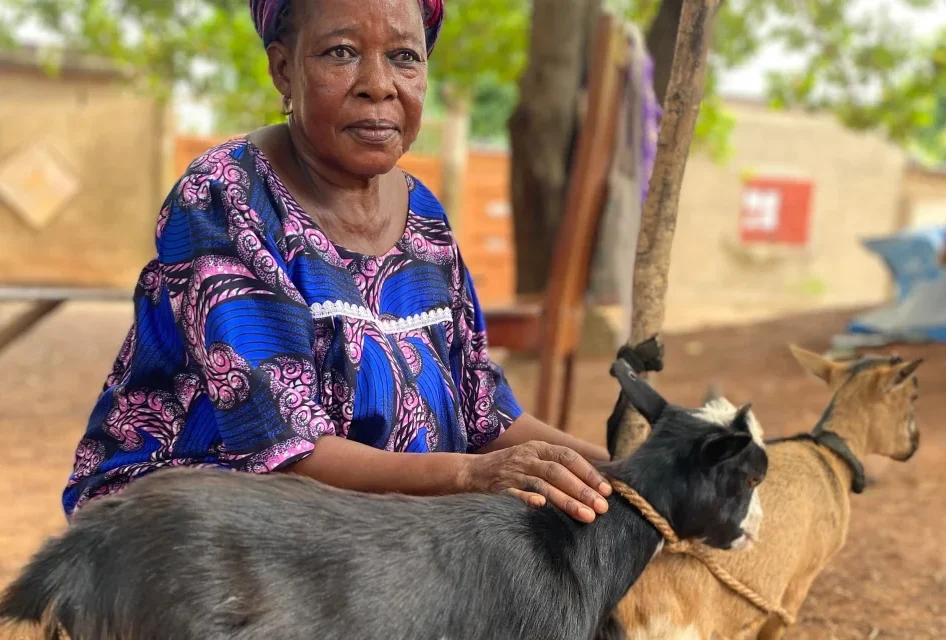
Widows in Benin are rebuilding their lives through an unexpected gift: two goats that offer income, dignity and the reminder that they are deeply loved by ...

Mission worker Dominique has spent the past eight months serving women in Nigeria’s Plateau State, where hundreds of widows are rebuilding their lives af...
We asked mission worker Ryan, how do learn to love the people and culture you serve?
You don’t need a passport to be part of God’s global work. From prayer and financial partnership to elevating mission stories in your church, here are ...
A statement from Kevin and Krista Rideout.
Galius had a tough childhood in Namibia. He lost his mother at childbirth and his father also passed away when he was a teenager. Today, Galius is st...
They come for the games, but they leave with something far greater. Across the world, Sports Friends camps are creating opportunities for young people to d...
We are grateful to confirm that our good friend and brother in Christ, Kevin Rideout, has been released after over nine months in captivity.
In Ethiopia, mission is taking new forms. Technology is opening doors into places once unreachable, and local believers are stepping forward with deep cult...
In northern Ghana, youth worker Charity has spent years building relationships with young people and their families. She encourages them in their faith wh...